
Varicose veins are enlarged, twisted veins that usually appear on the legs and feet. They develop when vein valves become weak or damaged, making it harder for blood to flow back to the heart. As a result, blood pools in the veins, causing them to bulge and turn bluish or purple. Apart from being a cosmetic concern, varicose veins may lead to discomfort, heaviness, or pain in the legs.
Table of Contents
Causes of Varicose Veins
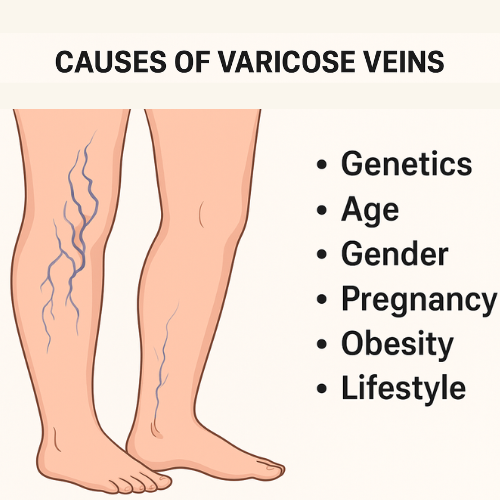
Varicose veins occur when the tiny valves inside veins become weak or damaged, making it harder for blood to flow back to the heart. Instead, blood collects in the veins, causing them to enlarge and twist. Several factors increase the chances of developing varicose veins:
- Genetics – Family history of vein problems.
- Age – Natural wear and tear weakens vein valves.
- Gender – Women are more prone due to hormonal changes, pregnancy, and menopause.
- Pregnancy – Extra blood flow and pressure on veins.
- Obesity – Excess weight increases pressure on leg veins.
- Lifestyle – Standing or sitting for long hours reduces circulation.
Symptoms of Varicose Veins
Varicose veins are more than just a cosmetic concern — they can cause a variety of symptoms that affect daily comfort and mobility. Common signs include:
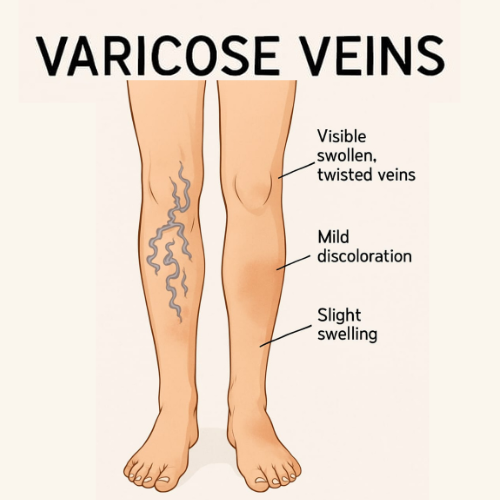
- Visible veins – Enlarged, twisted, or bulging veins that appear blue or purple.
- Leg pain or heaviness – A dull aching or throbbing sensation, especially after standing or sitting for long hours.
- Swelling – Around the ankles and lower legs.
- Itching or burning – Discomfort around the affected veins.
- Muscle cramps – Especially at night or after activity.
- Skin changes – Darkening, dryness, or irritation near the affected area.
If left untreated, severe varicose veins may lead to complications such as ulcers or blood clots.
Treatment Options for Varicose Veins
Varicose veins can be managed with both lifestyle changes and medical treatments, depending on severity. Common treatment options include:
- Lifestyle changes – Regular exercise, maintaining a healthy weight, elevating the legs, and avoiding prolonged standing or sitting improve circulation.
- Compression stockings – Specially designed stockings that apply gentle pressure to the legs, helping blood flow more effectively.
- Sclerotherapy – A minimally invasive procedure where a solution is injected into the vein, causing it to collapse and fade.
- Laser therapy – Uses focused light to close off smaller varicose veins or spider veins.
- Endovenous ablation – Heat or radiofrequency energy seals off damaged veins.
- Surgical options – In severe cases, procedures like vein stripping or ligation may be recommended.
With proper treatment, most people find significant relief from symptoms and improvement in the appearance of their legs.
Prevention Tips for Varicose Veins
While not all cases of varicose veins can be avoided, adopting healthy habits can greatly reduce the risk and improve vein health. Simple preventive measures include:
- Stay active – Regular walking, cycling, or yoga improves circulation.
- Maintain a healthy weight – Reduces excess pressure on leg veins.
- Elevate your legs – Helps blood flow back toward the heart.
- Avoid prolonged sitting or standing – Take short breaks to stretch and move around.
- Wear comfortable clothing and shoes – Avoid tight garments that restrict blood flow.
- Use compression stockings – Especially useful for those at higher risk.
Prevention is all about improving blood flow and reducing strain on the veins. Consistency with these habits keeps your legs healthier for longer.
Diet Tips to Prevent Varicose Veins
A healthy diet plays a big role in maintaining strong veins and promoting smooth blood circulation. Here are some effective dietary tips to lower the risk of varicose veins:
- Eat high-fiber foods – Whole grains, oats, beans, and leafy greens prevent constipation, which can increase vein pressure.
- Include flavonoid-rich foods – Citrus fruits, berries, onions, and spinach improve vein elasticity and reduce inflammation.
- Stay hydrated – Drinking plenty of water supports good circulation and prevents blood from thickening.
- Add potassium-rich foods – Bananas, avocados, and sweet potatoes help reduce leg swelling by balancing fluids.
- Limit salty and processed foods – Too much sodium can cause water retention and leg swelling.
- Healthy fats – Omega-3 from fish, flaxseeds, and walnuts improves blood vessel health.
Eating a balanced diet along with regular exercise is a natural way to protect your veins and keep varicose veins under control.
Conclusion
Varicose veins are a common condition that can affect both appearance and leg health. While they are often harmless, untreated cases may cause discomfort, swelling, or complications. The good news is that lifestyle changes, healthy diet, preventive care, and medical treatments can effectively manage varicose veins and improve circulation. Taking proactive steps early not only eases symptoms but also supports long-term vein health.
Frequently Asked Questions (FAQs) about Varicose Veins
1. Are varicose veins dangerous?
Most varicose veins are not life-threatening. However, severe cases may lead to ulcers, skin changes, or blood clots, which require medical attention.
2. Can exercise help with varicose veins?
Yes, regular exercise like walking, swimming, or yoga improves blood circulation and reduces pressure on the veins.
3. Do varicose veins go away naturally?
No, varicose veins typically do not disappear on their own. Lifestyle changes and treatments can reduce symptoms and improve appearance.
4. What foods are good for vein health?
High-fiber foods, citrus fruits, leafy greens, berries, and omega-3 rich foods like fish and walnuts are excellent for promoting healthy veins.
5. When should I see a doctor for varicose veins?
If you experience severe pain, swelling, skin ulcers, or sudden leg discomfort, consult a vascular specialist for proper diagnosis and treatment.