
Peripheral Arterial Disease (PAD) is a serious circulatory condition caused by narrowing of arteries that restricts blood flow to the limbs. This poor blood circulation in the legs often leads to leg pain while walking, slow-healing wounds, or a constant feeling of coldness in the feet. Peripheral Arterial Disease (PAD) is also known as peripheral vascular disease and is often linked to leg artery blockage from fatty deposits. Since blocked arteries can increase cardiovascular risk, recognizing the symptoms, causes, and treatment of Peripheral Arterial Disease (PAD) is essential for maintaining healthy blood circulation.
Table of Contents
What is Peripheral Arterial Disease (PAD) and How It Affects Blood Circulation?
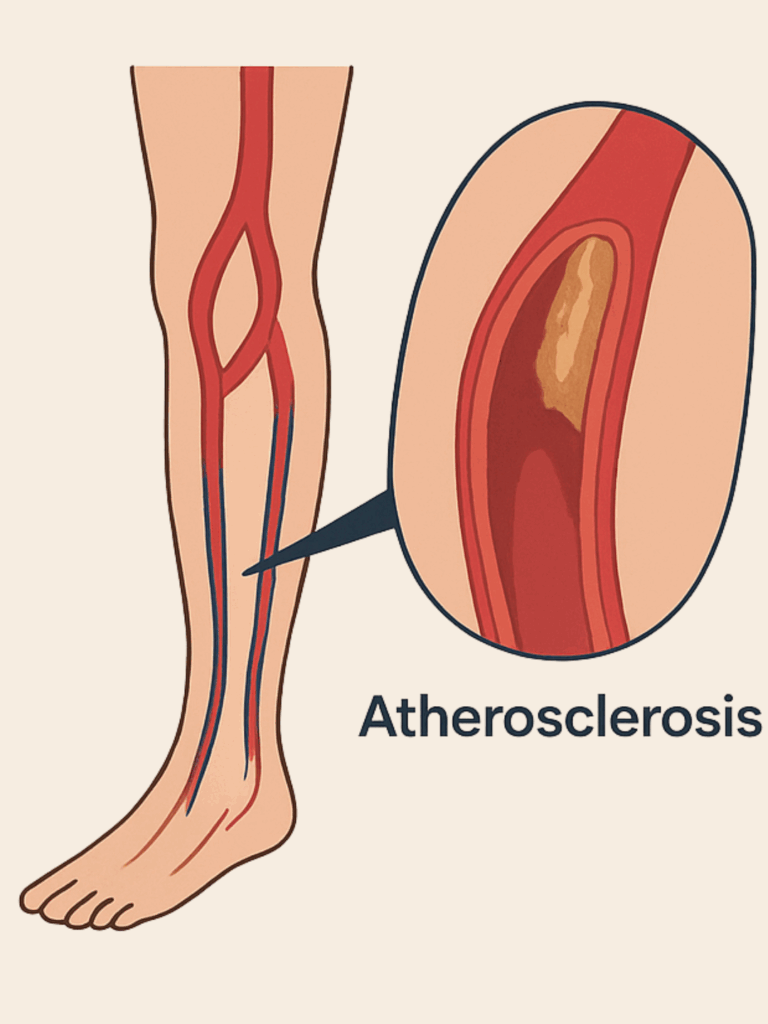
Peripheral Arterial Disease (PAD) is a condition that occurs when the arteries that carry blood to the limbs—most commonly the legs—become narrowed or blocked due to a buildup of fatty deposits, also known as plaque. This process, called atherosclerosis, restricts blood flow and prevents the muscles and tissues from getting enough oxygen-rich blood.
When blood circulation in the legs is reduced, individuals may experience leg pain while walking (claudication), numbness, weakness, or a feeling of heaviness. Over time, untreated Peripheral Arterial Disease (PAD) can cause severe complications such as non-healing wounds, infections, and even an increased risk of heart attack or stroke.
In simple terms, Peripheral Arterial Disease (PAD) is not just a problem of the legs—it is a warning sign of widespread artery disease that affects overall blood circulation and heart health.
Causes and Risk Factors of Peripheral Arterial Disease (PAD) and Leg Artery Blockage
Peripheral Arterial Disease (PAD), also known as leg artery blockage, occurs when the arteries that supply blood to the legs and feet become narrowed or blocked due to the buildup of fatty deposits (atherosclerosis). This restricts blood flow and increases the risk of serious complications.
Major Causes and Risk Factors of PAD include:
- Atherosclerosis – The primary cause, where plaque builds up inside the arteries.
- Smoking – Strongest risk factor, damages blood vessels and accelerates plaque formation.
- Diabetes – Increases risk of artery damage and poor circulation.
- High Blood Pressure (Hypertension) – Puts extra strain on artery walls.
- High Cholesterol – Promotes fatty plaque buildup in arteries.
- Obesity – Contributes to diabetes, hypertension, and poor circulation.
- Age (50+ years) – Risk increases with age.
- Family History of Heart Disease or Stroke – Increases genetic susceptibility.
- Sedentary Lifestyle – Lack of exercise reduces circulation and heart health.
- Unhealthy Diet – High in saturated fats, sugar, and processed foods.
Common Symptoms of Peripheral Arterial Disease (PAD) and Poor Circulation in Legs
Peripheral Arterial Disease (PAD), often linked with poor circulation in the legs, develops when narrowed arteries reduce blood flow to the lower limbs. Recognizing the symptoms early is crucial for timely treatment.
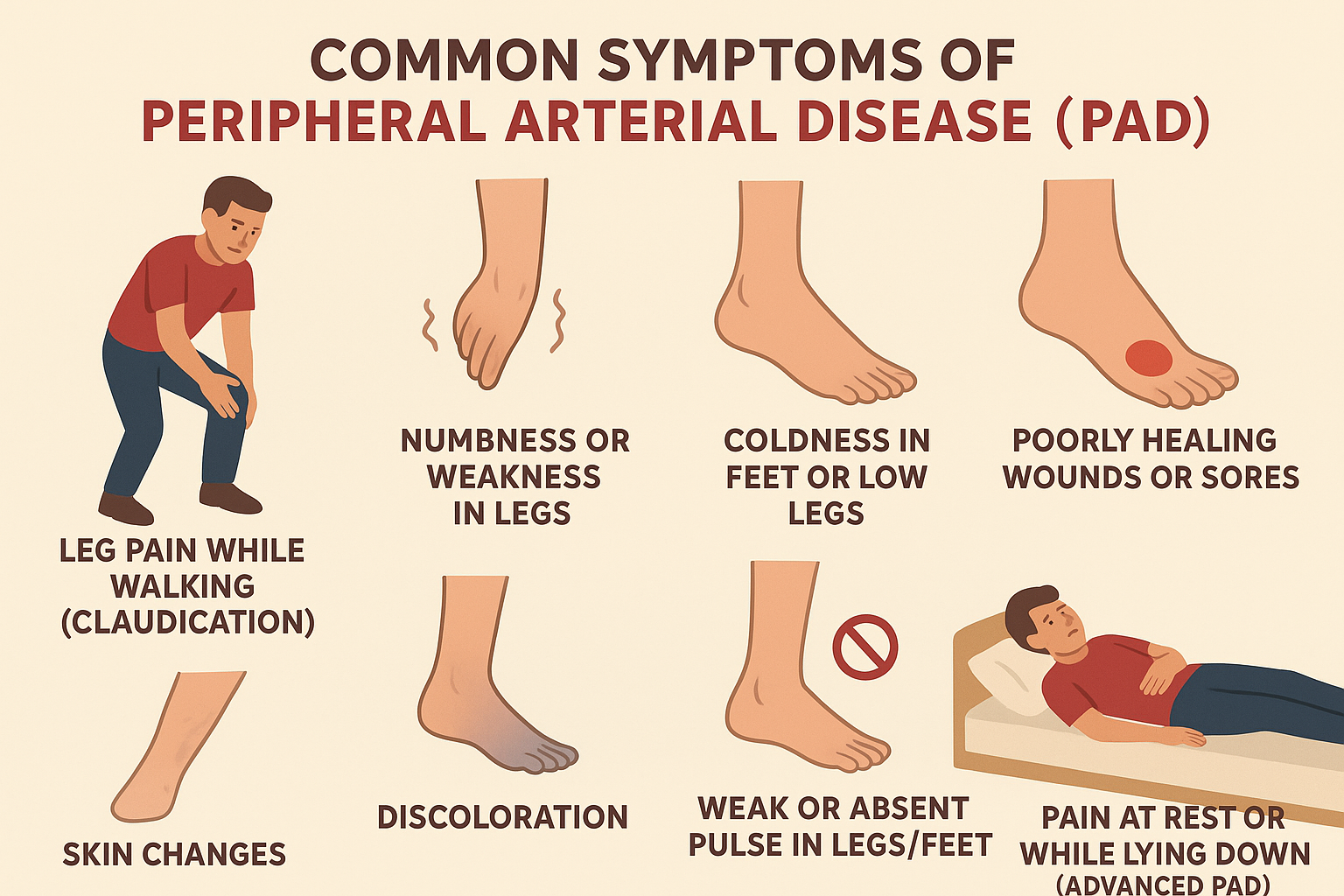
Common Symptoms of PAD and Poor Circulation in Legs include:
- Leg Pain While Walking (Claudication): Cramping or aching in the calves, thighs, or hips that worsens with activity and improves with rest.
- Numbness or Weakness in Legs: Reduced blood flow leads to weakness and tingling sensations.
- Coldness in Feet or Lower Legs: One leg may feel colder than the other.
- Poorly Healing Wounds or Sores: Cuts or ulcers on toes, feet, or legs take longer to heal.
- Skin Changes: Shiny skin, hair loss on legs, or slower toenail growth.
- Discoloration: Pale, bluish, or darkened skin on the legs or feet.
- Weak or Absent Pulse in Legs/Feet: Noticeable during a physical exam.
- Pain at Rest or While Lying Down (Advanced PAD): Severe cases may cause pain even during rest or sleep.
- How Peripheral Arterial Disease (PAD) is Diagnosed: Tests for Blocked Arteries in Legs
Peripheral Arterial Disease (PAD) is often underdiagnosed because its symptoms, such as leg pain while walking or fatigue, may be mistaken for aging or other conditions. However, early and accurate diagnosis of Peripheral Arterial Disease (PAD) is essential to prevent serious complications like severe artery blockage, poor blood circulation, or even amputation in advanced cases.
Common Diagnostic Tests for PAD:
- Ankle-Brachial Index (ABI):
This is the most common test for diagnosing Peripheral Arterial Disease (PAD). It compares blood pressure in the ankle with blood pressure in the arm. A lower pressure in the ankle suggests blocked arteries in the legs. - Doppler Ultrasound:
A non-invasive imaging test that uses sound waves to detect blood flow restriction and pinpoint areas of narrowing in the arteries. - Angiography:
A special imaging test where dye is injected into the arteries, making it easier to view artery blockages through X-ray, CT, or MRI scans. - Blood Tests:
While not directly diagnosing PAD, blood tests help identify cholesterol, blood sugar, and triglyceride levels, which are risk factors for Peripheral Arterial Disease (PAD).
By combining these diagnostic tools, doctors can confirm the presence of Peripheral Arterial Disease (PAD) and assess the severity of leg artery blockages, ensuring timely treatment to restore healthy blood circulation.
Treatment Options for Peripheral Arterial Disease (PAD) and Peripheral Vascular Disease
Peripheral Arterial Disease (PAD), also called peripheral vascular disease, can be managed effectively with the right treatment approach. The goal of treatment is to improve blood circulation in the legs, relieve symptoms such as leg pain while walking, and prevent complications like blocked arteries and cardiovascular events.
Common Treatment Options for Peripheral Arterial Disease (PAD):
- Lifestyle Modifications:
- Quitting smoking (a major risk factor for PAD)
- Regular exercise, especially supervised walking programs, to improve blood flow to the legs
- Following a heart-healthy diet low in saturated fats and cholesterol
- Medications:
Doctors may prescribe medicines to:- Lower cholesterol (statins)
- Control high blood pressure or diabetes
- Prevent blood clots with antiplatelet drugs (aspirin, clopidogrel)
These reduce the risk of worsening Peripheral Arterial Disease (PAD) and heart attack or stroke.
- Minimally Invasive Procedures:
- Angioplasty and stent placement: A balloon is used to open narrowed arteries, and a stent is placed to keep them open.
- Atherectomy: Removes plaque from blocked arteries in the legs.
- Surgical Treatments:
- Bypass surgery creates a detour around the blocked artery to restore healthy blood circulation.
With timely medical attention and lifestyle changes, many people with Peripheral Arterial Disease (PAD) can reduce symptoms, restore mobility, and prevent severe complications.
Lifestyle Changes to Improve Blood Flow and Manage Peripheral Arterial Disease (PAD)
Managing Peripheral Arterial Disease (PAD) goes beyond medical treatment — adopting the right lifestyle changes can significantly improve blood circulation in the legs and reduce the risk of artery blockages. These healthy habits not only help control symptoms of Peripheral Arterial Disease (PAD) but also protect against other cardiovascular problems.
Key Lifestyle Changes for PAD Management:
- Quit Smoking Immediately
Smoking is the leading risk factor for Peripheral Arterial Disease (PAD). Quitting smoking improves blood flow, lowers the risk of artery narrowing, and boosts overall heart health. - Exercise Regularly
Supervised walking programs are highly effective. Walking until mild pain, resting, and then continuing helps develop new blood vessels, improving circulation in blocked leg arteries. - Adopt a Heart-Healthy Diet
Eating foods rich in fruits, vegetables, whole grains, lean proteins, and healthy fats helps reduce cholesterol buildup and manage artery disease. Avoid processed foods and trans fats that worsen peripheral vascular disease. - Maintain a Healthy Weight
Weight control reduces stress on the heart and arteries, making it easier for blood to flow freely. - Manage Chronic Conditions
Conditions such as diabetes, high blood pressure, and high cholesterol worsen Peripheral Arterial Disease (PAD). Keeping them under control is vital for preventing complications.
By making these lifestyle changes, individuals with Peripheral Arterial Disease (PAD) can improve mobility, reduce pain, and support long-term artery health.
Living Better with Peripheral Arterial Disease (PAD)
Peripheral Arterial Disease (PAD) is more than just a problem of poor blood circulation in the legs — it is a serious warning sign of overall artery health. Recognizing the causes, symptoms, and treatment options for Peripheral Arterial Disease (PAD) is the first step toward preventing severe complications such as heart attack, stroke, or limb amputation.
The good news is that with early diagnosis, lifestyle changes, and proper medical care, most people with Peripheral Arterial Disease (PAD) can manage their condition effectively and continue living an active life. Quitting smoking, exercising regularly, eating a heart-healthy diet, and following medical advice are powerful ways to restore healthy blood flow and reduce cardiovascular risks.
Taking action today can make a life-changing difference — because treating Peripheral Arterial Disease (PAD) early means protecting not only your legs but also your heart and overall well-being.